Send Dr. Riley a Voicenote Using the Mic, Bottom Right

Videos

Oct. 20, 2026

Are your vape cartridge additives safe to inhale? #shorts

PEG, MCT oil, and propylene glycol may be used as diluents, but their suitability for inhalation raises important questions. In this clip, we explore why some compounds may pose concerns in the lungs and how ingredient compatibility can affect vape cartridge stability. 🔗 Watch the full video: https://youtu.be/wa6mjPzfx3A #VapeSafety #CannabisScience…

View more
Oct. 15, 2026

Real Data Project: Connect Feelings to Chemical Data! #shorts

Cannabis product labels can tell you a lot about the chemistry of a product: cannabinoids, terpenes, and other COA information. But what happens when that information is connected to the consumer’s actual experience? The Real Data Project is exploring exactly that. Users can scan a product label or QR code,…

View more
Oct. 14, 2026

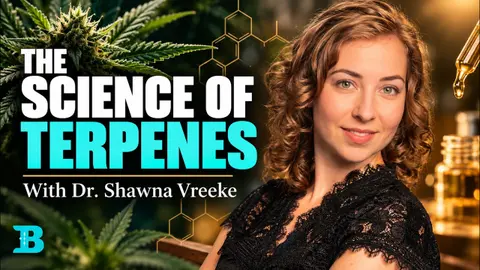
The Science of Terpenes with Dr. Shawna Vreeke

What are cannabis terpenes, how do they influence aroma and consumer experiences, and what do we know about their safety? On this episode of the Bioactive Podcast, Dr. Riley Kirk sits down with Dr. Shawna Vreeke, PhD, DABT, Head of Toxicology at True Terpenes, to explore the science of cannabis…

View more
Oct. 13, 2026

Vote No on 8 Massachusetts Friends!

View more
Oct. 13, 2026

Why is cannabis still left out of the mental health conversation? #shorts

The conversation around psychedelics and mental health has grown rapidly, including discussions around their use alongside therapy. But cannabis is rarely included in the same conversation. In this episode of the Bioactive Podcast, the discussion explores that gap and questions why cannabis is still viewed so differently when it comes…

View more
Oct. 10, 2026

What if you could explore cannabis research yourself instead of waiting for the paper? #shorts

A lot of cannabis research never reaches the average consumer in an accessible way. Papers can take time to publish, sit behind paywalls, and be written in highly technical language. The Real Data Project is taking a different approach: making real-world cannabis data available through interactive dashboards that anyone can…

View more
Oct. 7, 2026

CBC (Cannabichromene) Explained: Benefits, Effects & What the Research Says.

Love this info and want to learn more cannabinoid science?? Grab a copy of my book, Reefer Wellness!! https://a.co/d/0dXf4zPv What is CBC (cannabichromene), what does it do, and what does the research actually say about its potential effects and benefits? In this video, Dr. Riley Kirk, PhD, breaks down the…

View more
Oct. 7, 2026

What can real-world cannabis data actually tell us? #shorts

What happens when cannabis research starts looking at how people actually use cannabis in the real world? That’s the conversation at the heart of our newest Bioactive Podcast episode. Dr. Riley Kirk is joined by Dr. Miyabe Shields (@miyabephd) for a special NAP Time episode exploring the Real Data Project,…

View more
Oct. 3, 2026

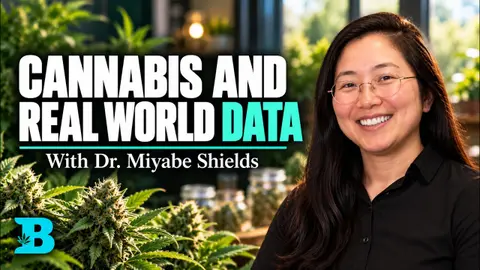
Cannabis and Real World Data with Dr. Miyabe Shields

Dr. Riley Kirk welcomes Dr. Miyabe Shields for a deep dive into cannabis real-world data, cannabis consumption patterns, dosing, neurodivergent cannabis use, and the Endocannabinoid System (ECS). As co-founders of the Network of Applied Pharmacognosy (NAP), Riley and Miyabe discuss the newly accessible Real Data Project, including what large-scale consumer…

View more
Oct. 1, 2026

Nitrate's Impact on Calvin Cycle & Plant Biomass #shorts

Nitrogen is essential for plant growth, but how much of the plant’s photosynthetic energy is being spent converting nitrate? When plants rely heavily on nitrate, a significant amount of the reduction power generated through photosynthesis can be directed toward nitrate conversion. Meanwhile, cannabis biomass and many of its major secondary…

View more
Sept. 28, 2026

Could anthocyanins help plants absorb magnesium? #shorts

Anthocyanins are best known for giving plants those deep red, purple, and blue colors, but they may have another interesting role. Their chemical structure can interact with magnesium, potentially forming metallo-anthocyanin complexes that could provide a foliar-friendly way to deliver magnesium to leaves. And there’s another fascinating connection: anthocyanins also…

View more
Sept. 25, 2026

What if COâ‚‚ is the biggest growth lever in the room? #shorts

You can’t simply double the water or light and expect a plant to grow twice as fast. But increasing the carbon load can dramatically change what a plant is capable of producing, provided the other inputs keep up with its increased demands. So what happens when you pull on the…

View more
Sept. 24, 2026

CBG (Cannabigerol) Explained: Benefits, Effects & What the Research Says

What is CBG (cannabigerol), what does it do, and what does the research actually say about its potential benefits and effects? In this video, Dr. Riley Kirk, PhD, breaks down the science of CBG, one of the many cannabinoids produced by the cannabis plant. We’ll look at what CBG is,…

View more
Sept. 23, 2026

Not all carbon is equally useful to plants! #shorts

CO₂ is essential for plant growth, but what if the form of carbon you feed your plants matters too? Fulvic and humic acids can be large and complex, while smaller carbon compounds may move into plant cells and activate specific processes. That raises a bigger question: Could functional carbon help…

View more
Sept. 23, 2026

Peppercorn to reduce anxiety from 🌱HC??

View more
Sept. 18, 2026

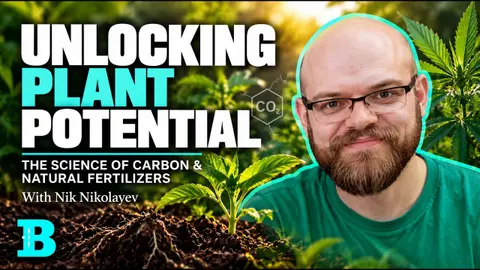
Unlocking Plant Potential: The Science of Carbon and Natural Fertilizers with Nik Nikolayev

What if carbon is one of the most overlooked inputs in plant nutrition? In this episode of the Bioactive Podcast, Dr. Riley Kirk sits down with Nik Nikolayev, CEO of Rooted Leaf Agritech, to explore the science of carbon-based fertilizers, plant nutrition, biostimulants, organic acids, and the chemistry behind plant…

View more
Sept. 17, 2026

Could VR Goggles Detect Marijuana Impairment? #shorts

What if a roadside impairment test could look beyond THC levels and actually measure how marijuana is affecting you? Imagine being pulled over after driving erratically and, instead of relying on a single THC measurement, putting on a pair of VR goggles designed to run multiple tests at once. Eye…

View more
Sept. 16, 2026

Marijuana can affect your pupils in a very specific way

Your pupils may reveal something interesting about marijuana use. 👀 When light hits the eye, the pupil constricts. But with marijuana, researchers observed something unusual: the pupil can begin dilating again while the light is still shining. That discovery could have important implications for developing objective ways to detect marijuana…

View more
Sept. 15, 2026

What Causes the Stoneover??

View more
Sept. 10, 2026

THC Found in Tears: Study Reveals Surprising Details #shorts

THC doesn’t just show up in blood, breath, or saliva. Research has found that THC can be highly concentrated in tears, raising fascinating questions about what our eyes could reveal about cannabis use and impairment. Could tears become part of the future of cannabis testing? And what could this mean…

View more
Sept. 9, 2026

Exercise and Sex Release Endocannabinoids !

View more
Sept. 8, 2026

Cannabis vs. Alcohol: Why THC Impairment is Harder to Test #shorts

If THC is in your system, does that automatically mean you’re too impaired to drive? With alcohol, we have a relatively straightforward roadside tool: blow into a breathalyzer, get a number, and that number can help indicate impairment. Cannabis doesn’t work that neatly. So if THC levels alone can’t reliably…

View more
Sept. 4, 2026

Cannabis and Driving with Dr. Denise Valenti

Dr. Riley Kirk has Dr. Denise Valenti on the podcast to discuss cannabis and driving, cannabis impairment, THC testing, and the challenges of determining whether someone is actually too impaired to drive. They explore why THC levels in the body do not necessarily correspond to impairment and how cannabis can…

View more
Sept. 3, 2026

Could B1 + Magnesium Help With Nausea?

Nausea and vomiting may involve more than just the stomach. Vitamin B1 (thiamine) and magnesium are two nutrients worth understanding, particularly when looking at conditions involving recurrent nausea and vomiting. But there’s another layer: the form of vitamin B1 matters. Benfotiamine and allithiamine are fat-soluble forms of thiamine that may…

View more